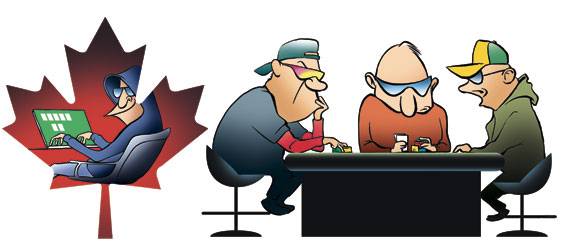

Exodus of online poker players under way
Chris Morris / Special to the Sun
Thursday
4 August 2011
2 a.m.
Archives
- Poker websites’ actions were risky, experts say (4-29-2011)
- Caesars CEO Gary Loveman: Poker indictments present opportunity (4-26-2011)
- Internet poker company looks to Nevada for entry into U.S. (3-21-2011)
- Bill would set regulations for Internet poker (3-10-2011)
- NV considers Internet poker bill, but casinos balk (3-10-2011)
- Board OKs Caesars Entertainment ties with foreign Internet gaming company (3-9-2011)
- Online gambling is illegal, but betting sites’ logos often in Nevada casinos (7-13-2010)
- Question evolving from legalization debate: How to tax online casinos?
- Lawmakers push to regulate, tax online gaming (5-19-2010)
- With aggressive push, Internet gambling again in play (2-9-2010)
VEGAS INC Coverage
Like many people who moved to Las Vegas seeking opportunity, Shaun Deeb is considering leaving town for greener pastures.
But unlike the recession-triggered exodus of construction and hospitality workers, the sagging economy isn’t factoring into Deeb’s moving plans. In fact, he and a few hundred other people in town who share his vocation seem immune to the dips and turns in the economy.
Deeb and others in his circle boast of working hard — minimum 10-hour shifts — and playing hard — enjoying some of the fanciest restaurants and nightclubs in town.
And if they want to maintain that lifestyle, they’re having to move out of town.
Deeb and the others are online poker players.
And their freewheeling lifestyle came to a screeching halt April 15, on a day since dubbed “Black Friday” by the poker community. On tax day, the Justice Department — which long ago declared Internet gambling illegal — shut down the country’s largest poker websites and indicted their CEOs. The most significant Internet gambling crackdown in American history has tied up millions of dollars players deposited on at least two of those websites and sent employees and customers of the targeted sites scrambling for other sources of income.
“Guys in their 20s who were making from $30,000 to $80,000 or more online ... what other life skills do they really have?” said Dan Michalski, editor of Pokerati.com, a poker news and information website. “A lot of people are really lost and confused right now.”
Finding themselves without ready access to ply their trade, Deeb and others like him are preparing to move to places such as Canada, Costa Rica or Mexico, which are among the many countries where Internet gambling is either legal or allowed to continue under laissez-faire governments.
“I used to play poker for 100 hours a week,” Deeb, 25, said. “Every day I sit around I get more motivated to leave.”
Tony Dunst’s friends are packing their bags for Canada.
Months from now, Dunst, the television commentator for the Los Angeles-based World Poker Tour, expects to be the only member of his online poker circle left in Las Vegas. He says his job, which allows him to travel the world playing casino poker tournaments, will lead to bigger career opportunities.
But his poker-playing entourage?
“Their lives revolved around playing online. They have no wives or kids,” he said. “They’re capable of making so much money online that it would be extremely financially stupid for them not to move.”
The loss of such players will be felt by businesses all over town, said Dunst, whose online winnings amount to about $800,000.
“You’re talking about people with a lot of discretionary income who like to spend it,” he said. “These are educated, bright guys and excellent consumers who weren’t frustrated by the economy.”
Las Vegas became a favored home base for many poker professionals because of the concentration of big-money poker games, tournaments and all-hours access to amenities and entertainment. Many online players also play poker in casinos — although those who make most of their money in virtual poker rooms have little use for the typically slower and more expensive games offered in Las Vegas casinos.
For pros such as Deeb, online poker resembles stock trading on Wall Street more than the more leisurely form of the game played in casinos, where assessing personalities and behavior plays a role.
Deeb typically plays more than 10 games of online poker at once — making lightning-quick decisions about which hands to call, raise or fold based on historical probabilities and hands played against particular opponents. Just as an appreciating stock can offset a declining one, a bad hand in one game can offset a better hand in another game.
The speed of play can make online poker a fast route to riches for a select few with photographic memories and expert math skills — or a rapid road to ruin for those with little aptitude for the game.
Many players prefer Internet poker rooms because they offer free training games where no money is wagered and cheap, penny- or dollar-ante games. Online poker sites generally charge smaller fees for overhead than brick-and-mortar casinos that have raised such fees over the years as poker has grown. And there’s no tipping dealers in cyberspace.
Online poker is “more like playing a video game” with friends than gambling in a casino, Dunst said.
“Live (casino) poker is really slow and monotonous, and the casino setting is generally unpleasant,” Dunst said. “You’re sitting in a chair for nine hours around people you might not like or want to listen to. For people like us who play eight to 20 games at a time from the comfort of our own home ... your buddies are around and you can watch movies and order food. You can talk strategy and communicate with friends from all over the world.”
Hundreds of mostly small, black market websites unaffected by the federal crackdown remain open for American gamblers. But in the wake of the government’s action, most online players in this country have stopped wagering online, because they no longer think their money is safe and are unwilling to try their luck on unfamiliar sites.
Over the years, federal prosecutors have seized millions of dollars in gambling proceeds from third parties that process gambling payments for online poker rooms. Although such efforts resulted in guilty pleas and jail time for some of those involved, players — who have never been subject to federal prosecution under laws that govern gambling operators — typically got their money back as sites refunded what was seized by the government in an effort to maintain public confidence in their growing empires.
Not this time.
Deeb, for one, isn’t hopeful about recovering any of the $150,000 he had on deposit with Full Tilt Poker and Absolute Poker when the feds stepped in.
“I was always a little concerned (about the legality of online poker) but I always thought my money was safe,” Deeb said. “I was kind of shocked how it went down. As a player, I always thought our money would be protected.”
Dunst, who is out more than $60,000, is equally scarred by the experience.
“Black Friday ruined everything. It will likely destroy a decent percentage of my net worth, it has crippled how I want to conduct my life and has made me quite pissed off at my own government.”
About 90 percent of online poker players — most of them Americans — dropped off the radar after Black Friday and didn’t switch to sites that remained open in the United States, said Dan Stewart, owner of PokerScout, a Las Vegas company that tracks online poker traffic worldwide.
The process has grown cumbersome for many Americans still trying their luck online.
Before Black Friday, stating another country of origin was all some websites needed to grant access to American players. Now, most of the larger and more popular poker websites have begun requiring players to provide proof of foreign residency, including copies of utility and phone bills, rental agreements and mortgage statements, players say. Some sites are warning players that any efforts to circumvent rules banning Americans could result in frozen or seized gambling accounts.
Jesse Knight, 39, and his wife, Patricia Marie Frick, think they’ve found a permanent solution. They recently moved to Mexico, where they play online poker from a new home in Tijuana.
They are among an estimated 100 or more people living in Las Vegas or Southern California who were employed by major online poker sites and put out of work after Black Friday. Those include people in marketing, programming and web design as well as players like Knight and Frick with contracts to play online for sites aiming to keep as many games going as possible.
The federal seizure of money the couple had on deposit online prevented them from participating in this year’s World Series of Poker in Las Vegas. From their home in Southern California, the couple traveled to Las Vegas several times a year for big tournaments and cash games. From hotel rooms in Las Vegas, they would supplement their income playing online poker.
The couple have no need to spend money in Las Vegas since moving to Mexico, where they play online without fear of government intervention, Knight said. Living in Tijuana doesn’t sound like an ideal future for an American, middle-class couple. It’s been a boon financially, however, he said.
Some countries “want to know who you are and why you are there,” he said. “Mexico is happy to have American dollars — and the visa fee.”
Some players are having second thoughts about uprooting their lives.
Steve Graham thought better of moving to Canada to play online full time. Instead, the Las Vegas resident is thinking of moving to Illinois, his home state, and getting a traditional job — maybe teaching.
Online poker doesn’t have the same appeal after having money seized online, said Graham, 31.
“I’m not happy about it. I’m kind of unclear about what the future of poker is going to be.”
For Deeb, who has won more than $6 million in online tournaments, moving is the only way he can continue a lifestyle to which he has grown accustomed.
The thought of being further removed from his tight-knit family in upstate New York is making his stomach turn, however.
“I always wanted to move out of the country but for a short term,” he said. “To live permanently in another country — that’s a crazy thing.”
Share
Join the Discussion:
Previous Discussion:
Discussion 6 comments
Only trusted comments are displayed on this page. Untrusted comments have expired from this story.
Most Popular
- New Las Vegas Strip arena to cost $350 million
- Here’s why hundreds of wannabe murderers are roaming our streets
- Sin City? Blog says the title rightfully belongs to St. Louis, not Las Vegas
- Company preparing to sell tickets for Las Vegas party train
- On tap for LV council: Olympic Garden rooftop pool, new retail near Mob Museum and energy codes


Great article, Liz.
No big loss for Americans if these poker players leave. But, also, I think those players that have the guts to turn their back on the US will be rewarded. Mexico, Costa Rica, Canada? All have a better quality of life. The US is heading down the toilet.
Do what's best for YOU!
Sounds like the crackdown is working. So tell me why we want to legalize this activity that employs such upstanding people if the law is now actually working???
Chunky says:
Once again our fine government dipping their sticky paws into the personal lives of individuals. They probably couldn't tax it or figure out how to tax it and thus they kill or try to kill what they can't tax or control.
It's all too easy to say "vote them out", the problem is they almost all come from the same mold or are molded into the system.
Bit by bit, every day our freedoms are eroded in one way or another.
That's what Chunky thinks!
What most poker players want is for the government to tax online poker, regulate it and legalize it. It's a "win win" for both poker players and the government coffers.
People who contribute so freely and enthusiastically to the economy by playing a game which is legal in most states, should not be forced to leave the country.
Work together to find a solution and reap the tax rewards. This all reminds me of prohibition back in the 20's.
QSS
They spend 80 to 100 hours a week working and it is work for anyone that has spent any time "working" at a computer all day. They use their money, they spend money in Vegas and do no harm.
Yes, this to bad they shut it all down. They hurt no one and was good for Vegas and was not on the public dole.
A job is a job. Glad they had one and now it is gone. Good luck to them where ever they move to.
Internet Poker was domed for a cracked long ago. This was written by me and others several months before the crack down. How stupid can one remain about the realities of the law and who has the real power when it comes to money. Clearly, the internet poker sites were consumed by the money and the demand, and failed to see the big picture.
The federal government will control internet poker from now on. It is now up to the states that have legalized gambling to inact laws empowering gaming regulators to write regulations approved by the government. The government wants their share. Plus, what a waste of good young minds, playing poker online. What a waste!
Our country needs this small shake-out to bring introverted computer fixated people out of the darkness of their made up reality, and bring them back into the real world. Money is not everything!
Does chunkey think[?] that people cheating other people through online poker is ok?
If chunkey isn't quick enough to realize that online poker is filled with cheating then I question if chunkey should be commenting on a subject he knows so little about.
The last time I was in a casino I noticed that it[like all the other casinos I visit] have [gasp] a POKER ROOM and in that room I saw [yes I did] people playing [gasp again] poker ..question[that won't get answered] why dont these [wink wink nudge nudge] professional poker players go to one of these casinos in their home town and play poker there?
Nother question/thought...a few months ago a man in northernNv was arrested for stealing fron approx 5 to 7 million dollars from the bank he was employed at and apperently lost it playing [nother GASP] online poker...so considering that online poker backers claim that they can go back and anal-ize hands to ass-ertain if cheating was going on wouldn't it be in that sites best interest to demonstrate that this poker pro lost all of this money onaccounta stupidity and not because he was cheated?
Nother question for Mr Chuckles''''
I ass-u-me that you play online poker [for fun just like I do of course] and have done so for several yrs. [once again just like me]..
Now here's your question about online poker cheating potential[ no money question Alex] ..have you ever noticed these fine folks at your table cheating?
Now you might ask [butt won't of course] why would anyone cheat at free play [not foreplay Chucky so settle down]?
Polishing your play for the other side that uses real money comes to mind.
Seriously Chunky if you really really have played online and you really really haven't caught anyone cheating you need to do 2 things [1] condider old maids instead of poker..and [2] never try to be a security officer at one of our casinos.
That's what pmart thinks!
Short version question for on line poker play backers.
Do you realy think[?] that you can stop cheating in the online poker games?
Really? then why cannot the 'hackers' be stopped from hacking into credit card sites,the Pentagon and other sites where security is of paramont importance.
In order for one to have $150,000 on account (unless they deposited it by some form other than winning), there has to be an amount greater than that lost by others. It would be interesting to hear about the other side, Those who lost it all sitting at home trying for the big score. I guess the answer to those winners would be to siphon off some of those winnings and try a regular bank, keeping a smaller amount "on deposit". Do they get a 1099 when they withdraw winnings? They should if it's a substantial amount. Don't casinos 1099 any winnings over $600.
I really have no problem with people winning money playing online poker, Congratulations to those who make it work for them. it just isn't for me.
I do have a friend who regularly goes th the casinos and plays blackjack, and wins most of the time. He calls it "going to work".
Chunky is right as usual. I agree with him.
That's what Jane thinks
i knew something was up.
kept my online poker account low.
short stacked when things went down.
I love how people classify "geeks" and "gamblers" in general as some sort of second-class citizenry in this matter. These people live is a so-called FREE America, and believe me, they contribute to the economy! In a FREE AMERICA, we should have these rights - remember the right to LIFE, LIBERTY and the PURSUIT of HAPPINESS?
Do you really think the government - who, by the way, has completely destroyed our constitution, habeas corpus, racked up a 14 trillion $ debt, deregulated the banking and investment industry to the point of near financial collapse, lied to you about the needed "bank bailout", who is only - maybe - a few short years away from losing our status as the reserve currency for the world with the IMF, who sold us down the river to countries like CHINA?! - is RIGHT about THIS?!
Unfortunately since slightly before WWII, our government has consistently made very poor decisions - and WE, THE PEOPLE, do nothing about it! YOUR government is NOT the same government of either our fathers, or our forefathers before us. And for what? All in the name of corporate greed?
The government only did this for one reason - to look like they were doing something about "illegal" gambling. Would SOMEONE tell me why internet poker is "illegal", yet Off-Track Betting (OTB) is OK??
Yeah, that's what I thought.
Please - wake up before it's too late. Restore the constitution, abolish the so-called "Patriot" Act, do something about this B.S. two-party system. and become a REAL Patriot - before you end up like sheep in a pen waiting to be sheared.
That's NOT what *I* think - it's what I KNOW!
pmart's right. Online poker is ripe for high-tech cheaters (hackers and superusers), and low tech cheaters (colluders playing on separate computers, communicating either in person or by phone).
Yeh, yeh, yeh, I'm a rigtard, but I'm not a sucker either.
"... For people like us who play eight to 20 games at a time from the comfort of our own home ... your buddies are around and you can watch movies and order food. You can talk strategy and communicate with friends from all over the world."
YOU CAN TALK ABOUT HANDS IN PROGRESS AND COMMUNICATE WITH FELLOW COLLUDERS ALL OVER THE WORLD.
Fixed the quote for you, Liz.
Liz, I can't stand reading this without calling BS. You have no way to verify any of the dollar amounts mentioned in this article. Poker players are notorious liars as that skill is essential to their so-called "craft". No mention of the major scandals involving on-line poker and mysterious servers run from Canadian Indian Reservation by an owner who lives in Summerlin (hey, it was on 60 Minutes 2-3 years ago). This entire story reeks of fiction and your newspaper is better than that. MORE INTERESTING ANGLE: When someone wins $800K in on-line poker, guess where that comes from???? IT COMES FROM PEOPLE WHO LOSE!!!!! Talk to those people about how they like the crack-down on on-line gaming. Homemakers, young people, addicts, elderly, and others. Yeah, I feel terrible for your subject in this "article". NOT!
@dave202
I do not understand the sarcasm regarding professional internet poker players. Those discussed in this article are, in fact, upstanding. What was mentioned about them that you find particularly off-putting?
As to your question of "why would we want to legalize [internet poker]?":
1) America was founded on the tenants of freedom from oppression and freedom of choice. How does banning a great past-time and potential source of income align with the mantras of "Land of the Free" and "Land of Opportunity"?
2) Regulated internet poker will bring in roughly $6 Billion dollars per year in tax revenue at a time when our country desperately needs it. That's more than tobacco, which kills tens of thousands of people per year (note: playing poker poses no more health risk than any other past time).
Most importantly, if we allow those in charge to ban adults from making decisions with their own money, there is eventually no limit to what our government will ban in the future. It is just a matter of time until they take away something you love. Therefore, it is important to support those who are fighting that fight already. People who play poker for a living, or for fun, are at the mercy of a government that is applying irrational thinking, outdated 'moral' agendas, and 11th hour B.S. legislation to eliminate a great American past time.
The question you should be asking is "why would anybody want to make this illegal?" Regulating internet poker is win win for EVERYBODY.
@ Solubrious1:
There are many ways to verify the values in this article. Websites such as sharkscope.com, officialpokerrankings.com, and pokertableratings.com are all 3rd party sites that track results for every tournament and cash table played on the major poker sites.
Also, you are right that poker is a zero-sum game. For every dollar won, someone has to lose. However, that is no different from the stock market. Every dollar earned by a savvy investor is lost by a schmuck. If you are going to use that as an argument against internet poker, you have to apply the exact same logic to to traditional investing.
In reference to the 60 Minutes episode that you watched, it was littered with inaccuracies, biased reporting, and an overemphasis on the downside to playing. The reality is that 0.4% of people in America who gamble fall into the category of 'problem gamblers'. Additionally, statistics show that problem gamblers are less likely to seek out poker games than they are to seek out casino games of chance that require no patience and the opportunity for a big fast score; poker provides neither of those which poker does not provide.
The vast majority of players, both winning and losing, play poker responsibly as a form of entertainment (and some for income). To support those who take that freedom away from us for reasons as ridiculous as 'protecting the 0.4% who are adversely effected' is grounds to question your intelligence.